

Farm machinery has transformed agriculture from a labour-intensive activity into a highly mechanised industry capable of feeding a growing global population with far fewer workers per acre than in previous generations. From tilling and planting to harvesting and processing, machinery now performs tasks that once required entire crews working by hand. Understanding the role modern equipment plays across different stages of production highlights just how central mechanisation has become to farm productivity and profitability.
Investing in advanced farm machinery has fundamentally revolutionized agriculture, enabling growers to dramatically increase their operational efficiency, reduce labor demands, and manage expansive acreages with unprecedented precision.
Reducing Labour Dependence and Increasing Output
Mechanised equipment allows a single operator to accomplish work that once required many labourers, which has become increasingly important as agricultural labour grows scarcer and more expensive in many regions. Tractors fitted with a wide range of implements can till, plant, spray, and harvest across large acreages in a fraction of the time manual methods would require. This shift has allowed farms to expand in scale while maintaining, or even reducing, their labour costs per unit of output, freeing up workers for tasks machinery cannot easily replace.
Precision Agriculture and Data-Driven Equipment
Modern machinery increasingly incorporates GPS guidance, automated steering, and sensors that collect data on soil conditions, yield, and input use in real time. This precision reduces waste by applying seed, fertiliser, and water only where needed rather than uniformly across a field. The data collected also helps farmers make more informed decisions about future planting and input strategies, turning machinery into a source of ongoing operational insight rather than just a tool for physical labour.
Specialised Equipment for Different Farm Types
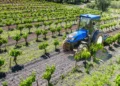
Machinery needs vary significantly depending on the type of operation, from row-crop farms requiring planters and combines to orchards needing specialised pruning and harvesting equipment, and livestock operations relying on feed mixers and manure handling systems. Matching equipment to the specific demands of the operation, rather than adopting a generic set of machinery, ensures that capital is spent on tools that genuinely improve efficiency for that particular type of farming.
Maintenance as a Productivity Factor
Even the most advanced machinery only delivers value when it is properly maintained and available when needed. Unexpected breakdowns during planting or harvest can cause costly delays that ripple through the rest of the season. Establishing a routine maintenance schedule and keeping critical spare parts on hand helps minimise downtime, ensuring that equipment continues to support, rather than hinder, farm operations during the most time-sensitive periods.
Conclusion
Farm machinery has reshaped what modern agricultural operations are capable of, extending the reach of a single operator, enabling precision input use, and supporting the specialised needs of different farm types. As equipment continues to incorporate more advanced technology, its role is shifting from simple mechanical assistance to an integrated part of farm management. Operations that invest in the right machinery and maintain it well are better positioned to sustain productivity and profitability over time.